

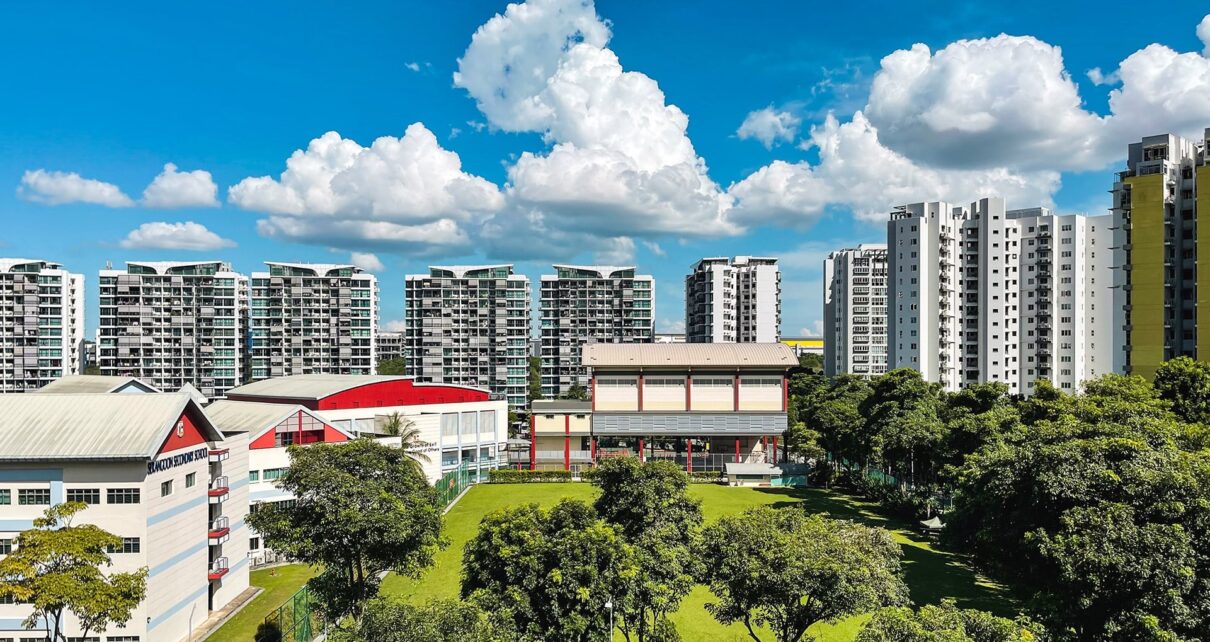
In Singapore’s residential property landscape, few micro-location drivers match the enduring market influence of proximity to top-ranking primary schools. While macroeconomic factors like global interest rates and national housing policies dictate broad market cycles, the demand for family-sized homes within 1km of prestigious schools remains insulated from broader economic volatility.
For domestic homebuyers, multi-generational families, and strategic property investors, understanding how the Ministry of Education’s (MOE) primary school registration frameworks influence resale liquidity, rental occupancy, and capital retention is essential for long-term real estate planning.
The 1km School Rule: How Registration Distance Categories Drive Housing Value
The MOE Primary One (P1) registration framework prioritizes home-to-school distance as a core criterion when applications exceed available vacancies. Applicants residing within 1km of a school receive priority over those living between 1km and 2km, while those living beyond 2km face the lowest probability of securing a place in oversubscribed schools.
This administrative rule creates a distinct “school-radius premium” across both central luxury districts and regional heartland hubs.
P1 REGISTRATION DISTANCE HIERARCHY
- Home-to-School Distance < 1km Highest Priority Access
- Home-to-School Distance 1km-2km Secondary Priority Access
- Home-to-School Distance > 2km Standard General Allocation
1. Resale Liquidity and Structural Price Support
Properties situated within 1km of popular primary schools benefit from a continuous pipeline of motivated buyers. As young families progress through life stages, a steady stream of domestic purchasers enters the market specifically seeking homes near primary institutions. This predictable demand pool creates a price floor, protecting property values even during market downturns.
2. Low Tenant Vacancy and Corporate Leasing Stability
For expatriate families and local parents who rent while waiting for school admissions or home completions, living within 1km of established local or international schools is a non-negotiable priority. Consequently, residential developments located within key education belts experience minimal rental vacancy periods and command premium rental yields.
Prime District School Belts: Core Central Stability and Family Living
Singapore’s Core Central Region (CCR)—particularly District 10—contains the highest concentration of elite primary, secondary, and tertiary educational institutions in the country. The Bukit Timah and Holland education belts attract high-net-worth families seeking permanent family residences surrounded by landed enclaves and lush greenery.
In mature central enclaves, land parcels suitable for low-density residential development are extremely scarce. When new private residential launches occur within these protected school belts, they generate immediate interest from owner-occupiers prioritizing generational asset stability.
Families evaluating low-density luxury residences near elite institutions like Methodist Girls’ School and Henry Park Primary often look toward projects like Amberwood at Holland, where generous 3- to 5-bedroom layouts, low-rise architectural massing, and tranquil surroundings in District 10 create an ideal long-term family sanctuary.
Suburban Educational Gateways: Balancing School Proximity with Regional Connectivity
While District 10 represents the central benchmark for luxury school-belt living, regional growth corridors in the Rest of Central Region (RCR) and Outside Central Region (OCR) provide highly attractive, family-oriented housing options anchored by top-performing heartland primary schools.
Suburban developments located near renowned schools combine high educational utility with immediate transport access, catering to HDB upgraders, young working couples, and yield-focused investors.
1. High-Performing Heartland Primary Institutions
Schools like Rulang Primary School and Shuqun Primary School in the western region consistently rank among Singapore’s most sought-after primary institutions. Homes located within 1km of these institutions experience sustained buyer interest from young families seeking high academic standards alongside accessible modern private housing.
2. Integrated Lifestyle and Transit Accessibility
Beyond school proximity, modern family buyers require comprehensive lifestyle infrastructure—including direct MRT connectivity, regional commercial malls, and extensive public parks. High-density developments positioned along major transport lines allow working parents to commute efficiently to regional employment hubs while enjoying immediate family amenities.
Investors and homebuyers seeking modern family residences situated beside major transport nodes and top primary institutions frequently explore developments like Lucerne Grand, where doorstep access to Lakeside MRT, proximity to Rulang Primary School, and adjacent green spaces at Jurong Lake Gardens offer an exceptional blend of lifestyle convenience and long-term rental demand.
Strategic Evaluation Checklist: Auditing Family Properties Before Purchase
To ensure a residential acquisition delivers both immediate lifestyle utility and long-term capital preservation, buyers should evaluate prospective family homes against four core criteria:
- Official Land Authority Distance Mapping:Always verify the precise home-to-school distance using OneMap Singapore. Distance is measured from the specific residential block’s entry point to the school’s official boundary line, not as a general neighborhood estimate.
- Functional Bedroom Layouts:Select floor plans that accommodate growing children, such as units with non-structural partition walls that can be reconfigured to create quiet study zones or enlarged bedrooms.
- Multi-Generational Adaptability:Ensure the development includes universal design features—such as step-free access, dual master bedrooms, and spacious living rooms—to comfortably support extended family co-living.
- Proximity to Complementary Amenities:Verify that daily necessities—such as supermarkets, pediatric clinics, childcare centers, and public park connectors—are within a comfortable 5- to 10-minute walk.
Property Planning Insight: While school registration distance criteria provide immediate utility during a child’s formative years, the long-term resale value of a school-adjacent property relies on its overall site quality, transport connectivity, and layout efficiency. Selecting a well-built project in an established enclave ensures your asset retains strong buyer demand long after your children have completed their primary education.
Strategic Summary for Homebuyers and Real Estate Investors
Investing in Singapore private real estate with a focus on primary school proximity offers an effective hedge against market volatility. By balancing the capital preservation of low-density prime central enclaves with the active yield performance of transit-linked suburban growth hubs, buyers can secure family homes that deliver immediate lifestyle comfort and enduring capital appreciation.