
Key Takeaways
- Live station food changes how people use their breaks, because waiting, watching, and deciding all take time that adds up across the room.
- Queues and crowding affect mood and movement more than food quality, which is why timing and space matter as much as what is being served.
- Clean-up and access shape behaviour during the event, not just after it, and influence whether guests continue engaging with the station.
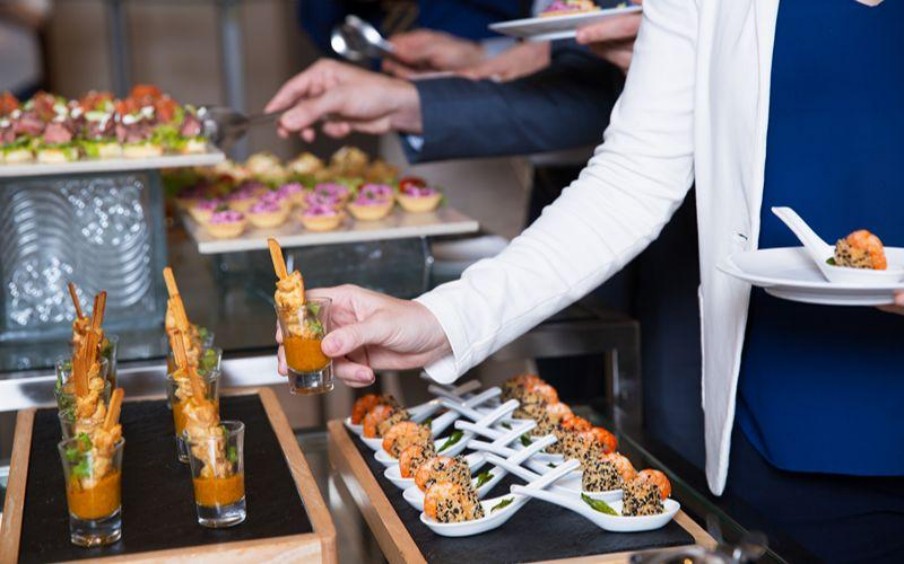
Live station food is usually chosen to make corporate events feel more engaging. The appeal is clear: food is prepared fresh, guests feel attended to, and breaks seem more lively than when trays are laid out in advance. During planning, this feels like a straightforward upgrade. Once the event begins, the effect becomes more complex. People stop moving through breaks in predictable ways and begin adjusting their time around the station instead. What was meant to support the programme starts influencing it. These shifts are subtle at first, which is why they often go unnoticed until the schedule begins to strain.
1. Assuming Interaction Will Speed Up the Break
Organisers often expect live stations to make breaks feel productive. Guests are engaged, food is visible, and conversation flows. What actually happens is that engagement lengthens each interaction. People pause to watch, wait, and decide. A short stop turns into several minutes, and those minutes accumulate across dozens of attendees. The break does not feel longer, but it functions as one. It is where timing pressure begins.
2. Treating the Station as a Side Detail
During planning, live station food is slotted in after agenda items are finalised. On the day, it becomes a reference point for movement. Attendees glance at the queue before deciding when to step out. Some leave early to avoid waiting, while others delay returning until the line shortens. When organisers continue treating the station as secondary, they miss how it quietly reshapes foot traffic.
3. Underestimating How Waiting Changes Mood
Waiting does more than slow service. Short queues feel manageable, but longer ones change how people experience the break. Attention shifts from rest to time awareness. Conversations shorten, and people become conscious of what they might miss next. Even when food quality is high, the mood tightens. This change often surprises organisers because it has little to do with the food itself.
4. Losing Control of Space Without Noticing
Live stations draw people into the same area repeatedly. Drinks, bags, and devices gather near the counter. Over time, pathways narrow. Guests approaching from behind hesitate, unsure where to stand. At this point, food availability matters less than access. The station is no longer inviting, even if the food remains. Space becomes the limiting factor, not supply.
5. Misreading When Demand Arrives
Because guests are unaware of how long the service will run, interest in live station food peaks early, which is a common challenge in corporate catering in Singapore. At the beginning of the break, people line up right away, causing congestion. Later, demand declines dramatically. Even flow planners initially feel overburdened and then underutilised. Misreading when people want food, rather than how much, is the source of the stress.
6. Treating Clean-Up as a Closing Task
Live stations generate waste continuously. Plates, napkins, and cups appear after every interaction. When clearing is delayed, clutter spreads outward from the station. The area feels crowded and less comfortable, which discourages return visits. Guests stop eating not because they are finished, but because the environment signals fatigue. Clean-up shapes behaviour long before the event ends.
7. Expecting Everyone to Break the Same Way
Corporate events bring together people with different roles and priorities. Some attendees step out briefly, others linger, and some return multiple times. Speakers and managers often delay their breaks altogether. Live station food interacts with all these patterns simultaneously. When organisers plan for one type of behaviour, tiny delays multiply across the room.
Conclusion
In Singapore, live station food gives corporate catering more exposure and vitality, but it also increases awareness of movement, timing, and space. Organisers often plan for the food they want to serve, not the behaviour it creates. The blind spots appear when these two do not align. Recognising how live stations influence attention and flow explains why well-planned events still feel harder to manage than expected.
Contact Elsie’s Kitchen to explore practical approaches to corporate catering with live station food.